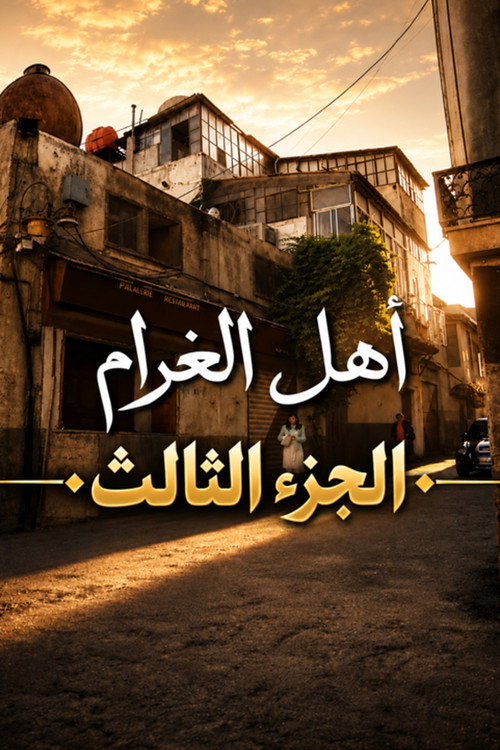
Season 3
Overview
The third season of the series followed the great success of its first two seasons, yet it adopted a different artistic format: it was structured into a series of five-episode dramatic arcs—stories that were distinct from one another, yet thematically interconnected. This season focused on love stories largely drawn from the realities of contemporary society and its complexities, shedding light on the psychological struggles, intricate relationships, and the social and material circumstances that often hinder the endurance or success of a romance.
Episodes

Rafiq, a successful plastic surgeon, meets Sama by chance and becomes determined to get closer to her. Meanwhile, Randa struggles with the rebellious behavior of her teenage son, Murad, as tensions begin to surface within their family. The episode takes its title from "El Gharam El Mostahil" (2014), performed by Lebanese singer Wael Kfoury on his album of the same name.
After discovering that his mother once had romantic feelings for Rafiq, Murad runs away from home. Meanwhile, Saria attempts to win Rafiq's affection, but he continues to keep his distance as his interest in Sama grows. The episode takes its title from "El Gharam El Mostahil" (2014), performed by Lebanese singer Wael Kfoury on his album of the same name.
Murad returns home after falling ill, prompting Rafiq to reassure him about his relationship with Randa. Meanwhile, Sama reveals the serious illness behind her reluctance to pursue a romance, while Mahmoud offers her an opportunity to work in Germany. The episode takes its title from "El Gharam El Mostahil" (2014), performed by Lebanese singer Wael Kfoury on his album of the same name.
Mahmoud tries to persuade Sama to accompany him to Germany, hoping to rekindle their former romance. Rafiq finally confesses his love for her, but her illness stands in the way, while a resentful Saria plots against him. The episode takes its title from "El Gharam El Mostahil" (2014), performed by Lebanese singer Wael Kfoury on his album of the same name.
After Rafiq is suspended from his job, Sama stands by him during a difficult period. Their relationship takes a hopeful turn as they make plans for marriage, but an unexpected twist of fate threatens the future they have imagined together. The episode takes its title from "El Gharam El Mostahil" (2014), performed by Lebanese singer Wael Kfoury on his album of the same name.
Jarir returns from abroad to visit his sister Khawla and her family. Eager to see him settle down, Khawla introduces him to her friend Zeina, a dentist, and Zeina's niece Sandra, hoping to arrange a marriage between Jarir and Sandra.
Jarir makes it clear that he has no interest in an arranged marriage, but Sandra continues trying to win his affection. Meanwhile, Zeina's painful past comes to light, revealing how her husband's prescription drug addiction led him to abandon her and their son.
Jarir rejects the idea of marrying Sandra and finds himself increasingly drawn to Zeina's personality and strength. Although he begins expressing his admiration, Zeina hesitates to return his feelings, knowing that her niece has already fallen for him.
Sandra is devastated when she discovers that Jarir has feelings for her aunt rather than her. Despite Jarir's sincere marriage proposal, Zeina struggles to accept, fearing that pursuing her own happiness could permanently damage her relationship with Sandra.
Sandra is devastated when she discovers that Jarir has feelings for her aunt rather than her. Despite Jarir's sincere marriage proposal, Zeina struggles to accept, fearing that pursuing her own happiness could permanently damage her relationship with Sandra.
Mira confesses her love to Fadi and discovers that he shares her feelings. Meanwhile, Ziad struggles emotionally after his father, Jamil, becomes romantically involved with the mother of his girlfriend, Yasmin, putting the young couple's relationship in jeopardy. The episode takes its title from "Ba'dak Habibi," performed by Fairuz in the early 1970s musical play Sah El Nom, with lyrics and music by the Rahbani Brothers.
Yasmin grows increasingly upset over Jamil's relationship with her mother. Elsewhere, Caesar discovers that his mother, Mirna, was romantically involved with another man before marrying his father, triggering a painful family confrontation. The episode takes its title from "Ba'dak Habibi," performed by Fairuz in the early 1970s musical play Sah El Nom, with lyrics and music by the Rahbani Brothers.
Jamil supports Hanadi through a health crisis, while Mira's uncle, Muhtasib, expresses romantic interest in Yasmin. As Mirna struggles with her son's behavior, Mira's father becomes suspicious of her relationship and begins investigating the young man in her life. The episode takes its title from "Ba'dak Habibi," performed by Fairuz in the early 1970s musical play Sah El Nom, with lyrics and music by the Rahbani Brothers.
Mirna discovers an unexpected connection between Mira and a man she once loved. Meanwhile, Mira's uncle learns about her secret relationship and informs her father that she has fallen for someone outside their religious community, creating a serious family conflict. The episode takes its title from "Ba'dak Habibi," performed by Fairuz in the early 1970s musical play Sah El Nom, with lyrics and music by the Rahbani Brothers.
Mira openly admits her relationship with Fadi, but her father demands that she end it because of their religious differences. As her uncle confronts Fadi and long-standing family tensions intensify, the young couple must face the consequences of their forbidden romance. The episode takes its title from "Ba'dak Habibi," performed by Fairuz in the early 1970s musical play Sah El Nom, with lyrics and music by the Rahbani Brothers.
After discovering that her husband, Riyad, is having an affair with Sara, Nada is involved in a car accident that leaves her with partial memory loss. Overcome with guilt, Riyad attempts to rebuild their marriage, while Nada's father grows suspicious of his sudden change in behavior.
Doctors determine that Nada's memory loss may be connected to psychological trauma. Determined to piece together her forgotten past, she seeks answers from Farid, a man who once played an important role in her life.
Farid reveals painful details about his former relationship with Nada, including her father's violent opposition to their marriage. Meanwhile, Nada discovers an unfamiliar lipstick in her home, raising new suspicions about Riyad's faithfulness.
Convinced that Riyad is being unfaithful, Nada confronts him, but he refuses to admit the truth. As her father opposes the idea of divorce, Sara reveals that she is pregnant, forcing Riyad to confront the consequences of his affair.
Nada confronts Sara about her relationship with Riyad, only to be met with denial. As Riyad secretly deepens his commitment to Sara, Farid uncovers photographic evidence of the affair, giving Nada the answers she has desperately been seeking.
Sami begins his career as a radio host with the encouragement of his fiancée, Mona, who is still recovering from a painful past relationship. When he unexpectedly reunites with his former love, Matar, he keeps the encounter secret to avoid provoking Mona's jealousy.
Sami confronts Matar about abandoning their relationship to pursue her dreams. When he discovers that Mona has been secretly recording him out of jealousy, he begins reconsidering their engagement, setting off an emotional crisis.
Following Mona's suicide attempt, her mother begs Sami not to abandon her during her recovery. Torn between guilt and his feelings for Matar, Sami finds himself caught in an increasingly painful situation as Matar grows frustrated by his continued involvement with Mona.
Sami learns that Matar suffered abuse in a previous relationship, deepening his concern for her. Meanwhile, Mona's uncontrollable jealousy creates a crisis in their marriage, leaving Sami struggling to repair his relationship with Matar.
Devastated by Abu Imad's death, Sami receives an unexpected opportunity when Matar offers to help him start a new life in Dubai. But Mona's alarming claim about her health threatens to pull him back into their troubled relationship.
After spending years in prison for a crime he did not commit, Yusuf is finally released and begins searching for his wife, Sham. Unaware that he has a daughter named Nour, he struggles to reconnect with the family and life he lost. The episode takes its title from "Ya Jarat Al Wadi," a poem by Ahmed Shawqi set to music and first performed by Mohamed Abdel Wahab in 1928. Fairuz later recorded her own interpretation.
Sham and her daughter, Nour, set out to find Yusuf after years of separation. When Nour discovers that her father was imprisoned on espionage charges, Sham tries to reassure her of his innocence while keeping their hopes of a family reunion alive. The episode takes its title from "Ya Jarat Al Wadi," a poem by Ahmed Shawqi set to music and first performed by Mohamed Abdel Wahab in 1928. Fairuz later recorded her own interpretation.
Yusuf's deteriorating health forces him to seek medical attention, while Sham and Nour face growing hostility over the accusations against him. As Nour becomes a target of bullying, their landlord demands that they leave their home. The episode takes its title from "Ya Jarat Al Wadi," a poem by Ahmed Shawqi set to music and first performed by Mohamed Abdel Wahab in 1928. Fairuz later recorded her own interpretation.
Sham's circumstances worsen after she loses her job, leaving her struggling to provide for her daughter. Despite their continued efforts to find one another, she and Yusuf remain separated, while Sham faces questioning by the authorities. The episode takes its title from "Ya Jarat Al Wadi," a poem by Ahmed Shawqi set to music and first performed by Mohamed Abdel Wahab in 1928. Fairuz later recorded her own interpretation.
Desperate to find Sham, Yusuf searches for the location where she was taken for questioning, but his efforts prove unsuccessful. As his health becomes an increasing concern, an unexpected encounter brings their long and painful separation to a critical moment. The episode takes its title from "Ya Jarat Al Wadi," a poem by Ahmed Shawqi set to music and first performed by Mohamed Abdel Wahab in 1928. Fairuz later recorded her own interpretation.