
Season 2
Episodes
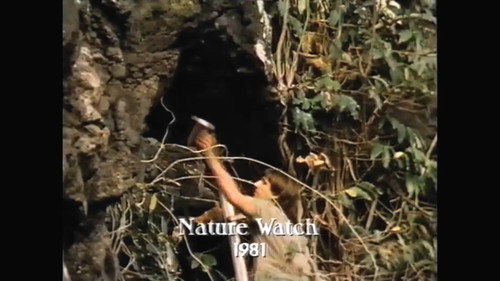
The first of two programmes focusing on young Welsh ornithologist Carl Jones and his efforts to save the Mauritian kestrel - one of the world's rarest birds of prey - from extinction.
Second of two programmes focusing on the work of ornithologist Carl Jones. In this programme, he describes the problems of raising the Mauritian kestrel chicks whose rescue from extinction was featured in the previous episode.
Zoologists at Manchester University, Robin Baker and Jan Mather, are experimenting to see whether humans have the same navigational instinct that is so drastically developed in other animals.
Underwater expert Jack Randall goes in search of new species of fish by diving around the South Pacific Islands and shopping in Hawaiian fish markets.
For twelve years, herdsman Ray Goodwin has been putting his hunting instincts to good use with a rifle microphone instead of a gun. His passion is the fox, but his recordings include everything from caterpillars to badgers to dung beetles.
High up in California's Sierra Nevada mountains, biologist Ron Stecker and colleague Tom Harvey are attempting to save from extinction the Giant Sequoia tree.
Bats horrify most people, but not Bob Stebbings, who became fascinated by them as a boy. As Britain's foremost expert on bats, he is now keen to improve the image, and hence the survival prospects, of our dwindling bat population.
Table Mountain is one of the world's most beautiful and prolific wild plant kingdoms, with more wild species than all of Britain. Dr Tony Hall tackles the serious threats to the area from habitat extinction, population sprawl and theft.
George Archibald's odd dancing partner is a female Whooping Crane - this helps her lay eggs and sustain the highly threatened species. He has pioneered many ways of saving the 15 types of cranes, recently hatching a rare Siberian Crane.
Brother Adam, an elderly Benedictine monk, is world-renowned for his work as a breeder of bees at Buckfast Abbey in South Devon. His quest to breed the perfect bee has led him across Europe, Africa and the Middle East.
Ever since Mount St Helens erupted in May 1980, American biologists have been plotting the return of animal, plant and insect life to the surrounding area, and are now discovering that the devastation is not as total as it first appeared.
Trees are so much a part of our landscape that we tend to take them for granted. Yet according to Alan Mitchell of the Forestry Commission, who catalogues the many thousands of species, Britain has the richest tree selection in the world.
Daphne Sheldrick ran an orphanage in Africa for baby animals whose parents had been slaughtered by poachers. We watch as she renews her acquaintance with an elephant she once bottle-fed.