
Season 1
Episodes
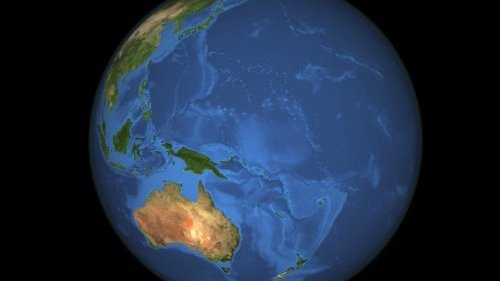
Scientists have been reconstructing the history of the Moon by scouring its surface, mapping its mountains and craters, and probing its interior. Find out what the origins of the Moon can tell us about our own planet's beginnings.
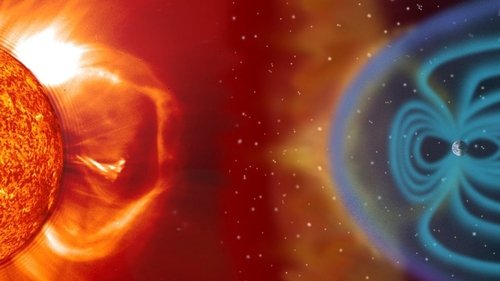
Massive solar eruptions take aim at our high-tech society. 93 million miles away... an angry sun vents its rage. Dark regions, called sunspots, appeared unexpectedly on its surface... a sign of rising tension within. It had been three and a half years since the sun last erupted in fury...at the peak of an 11-year cycle of solar flare-ups.
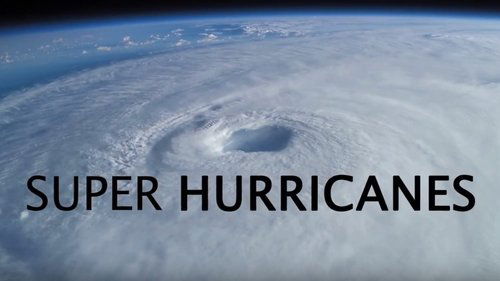
Why some tropical storms erupt into monster hurricanes capable of wrecking coastlines. Can they be predicted? Hurricanes are tropical storms that feed on solar heat captured by the oceans. When conditions are right, a hurricane can release this energy in a fury of wind and rain.
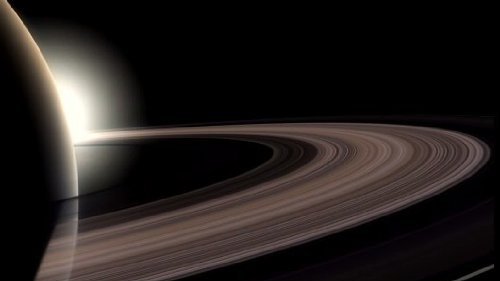
From the Cassini spacecraft comes one of the greatest photographic collections. Scientists are using it to uncover a trail of clues pointing to the energy sources and complex chemistry needed to spawn life.
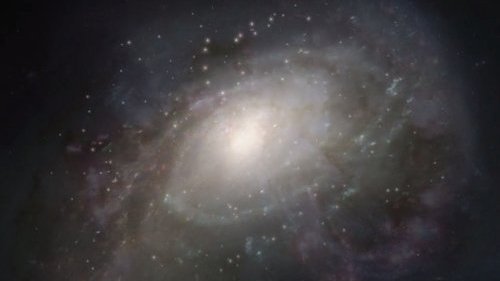
Our Milky Way Galaxy is thought to harbor millions of black holes, the ultra dense remnants of dead stars. But now, in the universe far beyond our galaxy, there's evidence of something far more ominous. A breed of black holes that has reached incomprehensible size and destructive power. Just how large, and violent, and strange can they get?
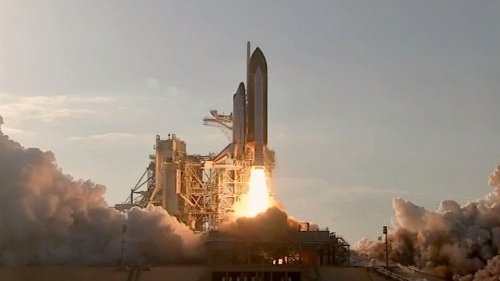
The mind-blowing answer comes from a theory describing the first micro-moments of our universe. Just as scientists began to make precise measurements of the observable universe, new ideas suggest that our visible patch is an impossibly small portion of the whole.
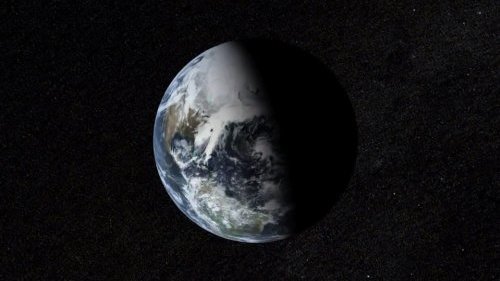
How long will the Universe as we know it survive? The answer depends on whether Stephen Hawking's theory about how black holes decay is right. These strange dense objects are like a clock that tick down to a distant moment when all matter and energy will dissipate into the void.
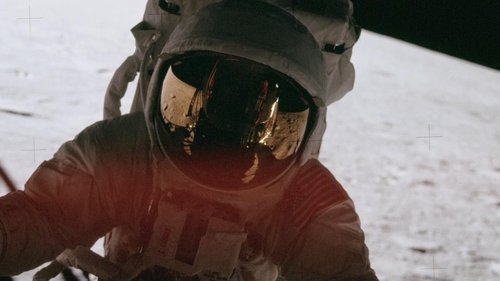
It's the ultimate buddy movie. Pete Conrad and Alan Bean were the second pair of Apollo astronauts to land on the moon. They combined precision with a sense of humor. But it was the rocks they picked up that would define the mission's legacy.
Thick dust and blinding starlight have long obscured our vision into the mysterious inner regions of our Milky Way galaxy. And yet, the clues have been piling up that something important, something strange is going on in there. Astronomers tracking stars in the center of the galaxy have found the best proof to date that black holes exist. Now, they are preparing to capture the first direct image of a supermassive black hole.
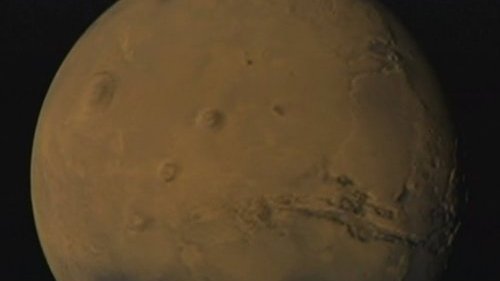
Did Mars long ago develop far enough for life to arise? If so, does anything still live somewhere underground? The search for answers has revealed the forces that long ago doomed the Red Planet.
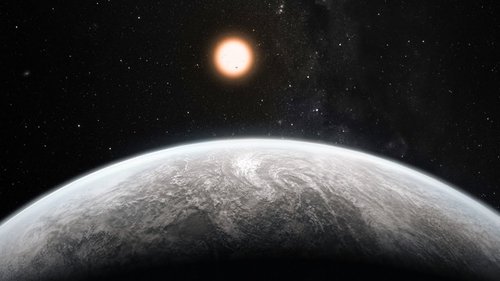
What is the search for Earth-like planets telling us about our place in the cosmos? Is our Earth one of countless life-bearing worlds strewn about the galaxy, or is it a rare Garden of Eden in a barren universe?
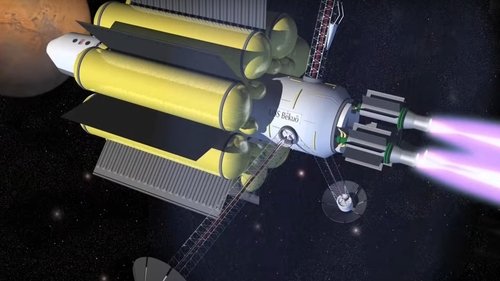
Pandora is the idyllic blue world featured in the movie Avatar. Its location is a real place: Alpha Centauri, the nearest star to our Sun and the most likely destination for our first journey beyond the solar system.
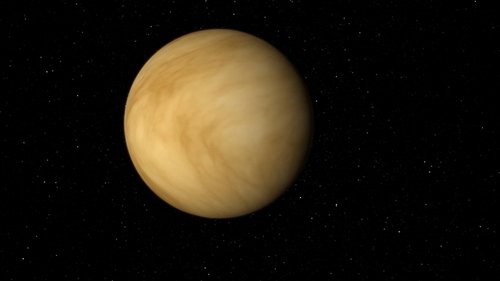
Long ago, from the fires of our Sun's birth, twin planets emerged: Venus and Earth. Nature draped one world in the greens and blues of life, while enveloping the other in acid clouds, high heat, and volcanic flows. Why did Venus take such a disastrous turn and Earth developed a vibrant biosphere?
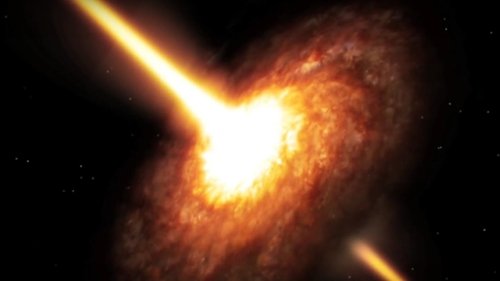
What's the hottest place in the universe? What's it like inside a Black Hole? This video climbs the power scales of the universe, from the coldest and bleakest reaches of our galaxy on out to the hottest and most violent places known.
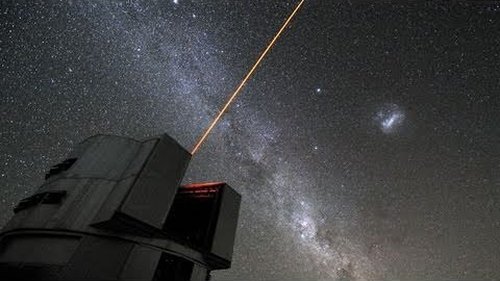
Explore the biggest question of all. How far do the stars stretch out into space? And what's beyond them? In modern times, we built giant telescopes that have allowed us to cast our gaze deep into the universe. Astronomers have been able to look back to near the time of its birth. They've reconstructed the course of cosmic history in astonishing detail.
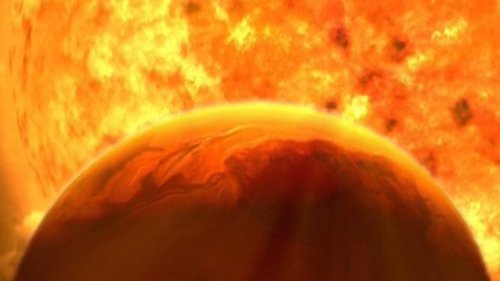
The hunt for planets beyond our solar system has reached a fever pitch. Scientists are beginning to envision what these worlds are like, and in the process, redefining what a planet might need to spawn life.
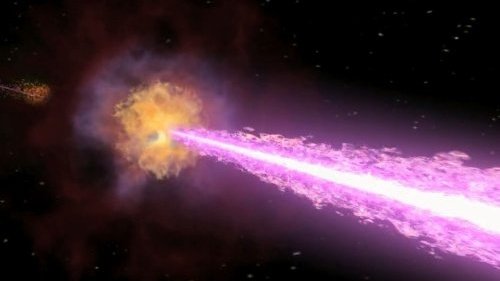
One of the deepest mysteries about how our universe came to be may finally be yielding to human investigation. Scientists are mounting new efforts to figure out how matter survived, and what happened to its birth twin, a mysterious substance known as antimatter?
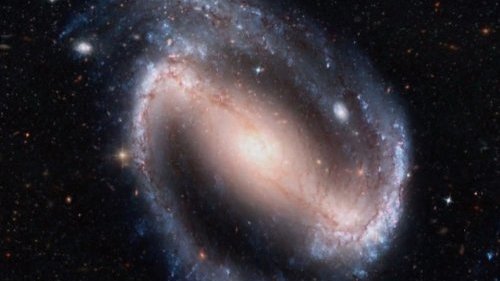
Cosmology has been turned on its head by a stunning discovery that the universe is flying apart in all directions at an ever-increasing rate. The scientists who made this discovery were awarded the Nobel Prize in Physics.
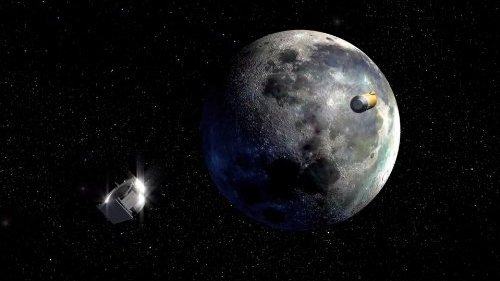
Over the next decade, the United States, Japan, India, China, Russia, and even private companies, are planning to send spacecraft to explore the moon. These missions are looking for resources that may one day allow humans to settle permanently in space.
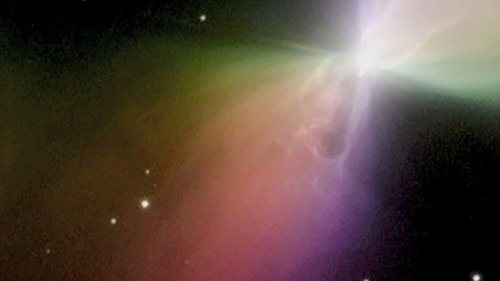
What are the energy extremes that define our universe? And how much power can the cosmos wield? Climb a ladder of increasingly powerful events, from frigid gas clouds to nuclear explosions, and travel out to the seething environments of black holes. Find out where Earth fits in the vast power scales of the cosmos.
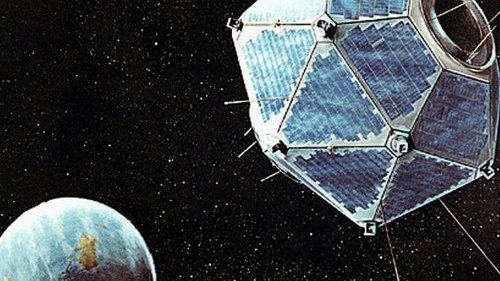
Spy satellites first saw these brief but extremely bright flashes of light in the 1960s. For three decades, gamma ray bursts for deep space were one of the persistent mysteries in all of science. It took a revolution in high-energy astronomy to prove that they are the distant birth cries of newborn black holes.
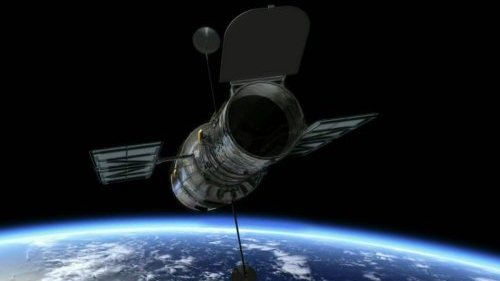
Join a small team of rocket designers as they open a window into the future of space travel.
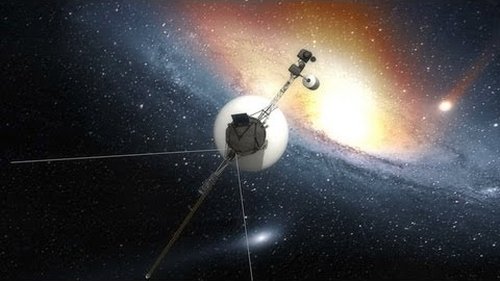
The two Voyager spacecraft are part of an ancient quest to push beyond our boundaries... to see what lies beyond the horizon. Now tens of billions of kilometers from Earth, two spacecraft are streaking out into the void. What will we learn about the Galaxy, the Universe, and ourselves from Voyager's epic Journey to the stars?
There are signs that Earth’s great stores of ice are beginning to melt. With sea levels beginning to rise, scientists are looking back at climates past to see where our planet may be headed 1000 into the future and beyond.
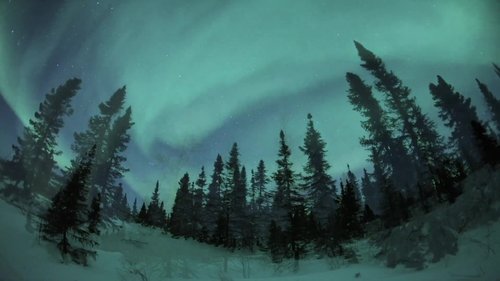
Follow Dr. Ben Longmier and his team into the rugged Alaskan wilderness on a quest to build a whole new type of rocket engine. Their goal is to test sensitive components by launching them into radiation-filled environments of space aboard helium balloons. Their goal is to revolutionize space travel and exploration by harnessing the energy contained in the dynamic fourth state of matter: plasma.
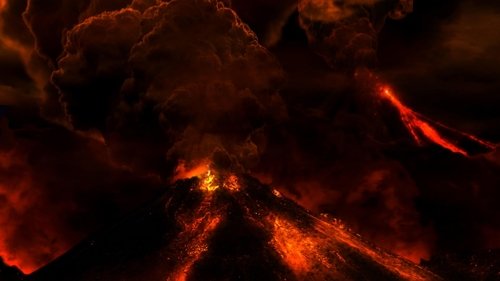
They are eruptions so vast, so Earth-shattering, they have changed the history of our planet. Climate collapse. Toxic turmoil. Mass extinction. Worse than a killer asteroid, or nuclear war, they are Earth's most destructive Supervolcanoes.
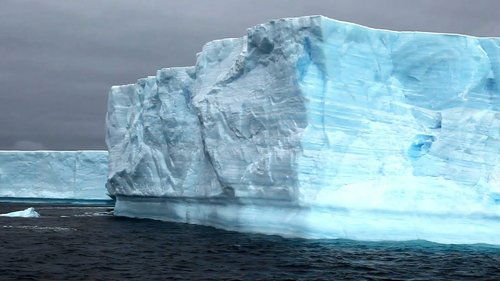
The episode of Cosmic Journeys explores the intersection of paleoclimate and current climate science. Through its turbulent history, Antarctica has played an important role in the evolution of planet Earth. This role will likely continue as a warming global climate begins to eat away at the ice sheets that cover the continent. The fate of the world as we know it is linked to the fate of Antarctica.
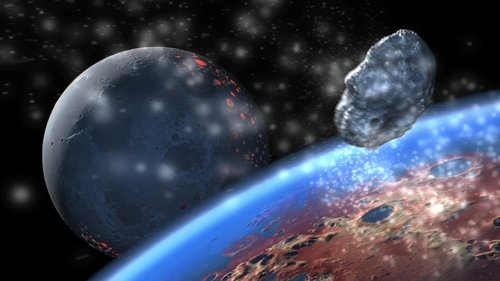
Are the universe and its physical laws so fine-tuned that the rise of life is inevitable? Or is life a fluke, a lucky roll of cosmic dice? We look for the answer in the rise of two important components of life, dust and water.
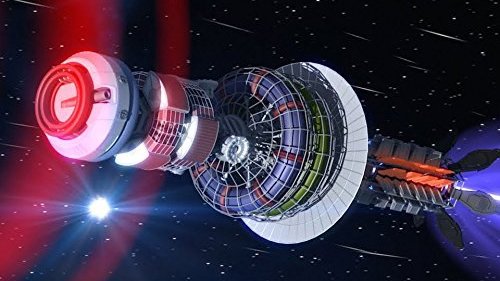
Explore the challenges of interstellar flight and the technological possibilities that may one day send us on a long voyage out into the galaxy. What imperatives will define the mission when it launches and finally arrives: exploration and science, or a struggle for survival?
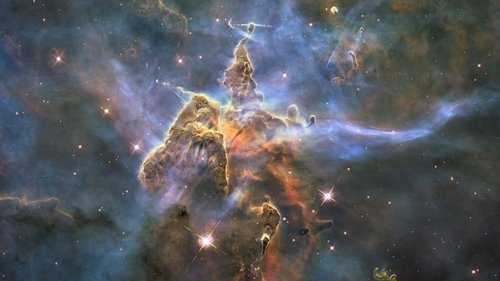
This staggeringly visual feast of a documentary Brings cutting-edge findings of modern astronomy to life with state-of-the-art animation, informed by supercomputer simulations of cosmic events. Marvel at the formation of a super-massive black hole 350 million lightyears away; admire the stunning beauty of the Orion nebula; and discover what the stars tell us about our place in the stretch of time and space.
Where do you look to glimpse the birth of a solar system like ours? Our sun is thought to have formed along with a range of stellar siblings. This star cluster likely moved out on its own, bound by gravity, in what astronomers call a "Moving Group."
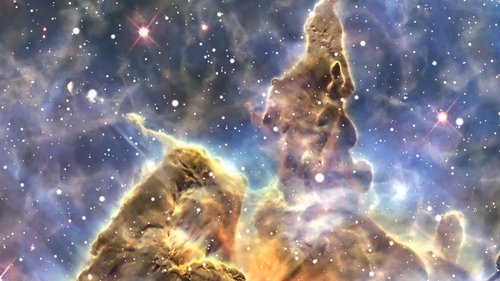
Since its launch 25 Years ago, the Hubble Telescope has returned images of unprecedented beauty of a dynamic and changing universe.
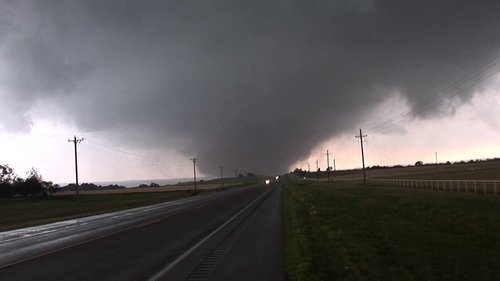
May 22nd, 2011. A powerful tornado cut a mile-wide swath through Joplin, Missouri, the costliest and one of the deadliest tornado disasters ever. What did scientists learn when they peered into the realm of this SuperTornado?

Asteroids racing through the solar system have smashed into Earth before. What are the chances we'll get hit again? Armed with new defensive technologies, scientists are getting ready for the day, a decade, century from now: the Day of the Asteroid.
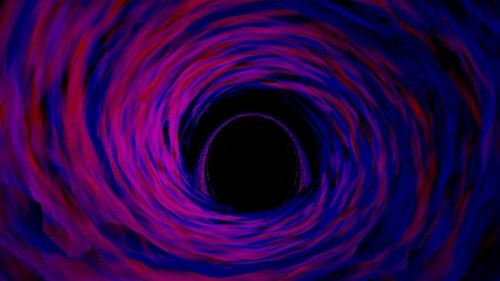
Astronomers are probing the high-energy cosmic frontier with a series of key missions: Fermi, Swift, Chandra, NuSTAR, and Hubble.
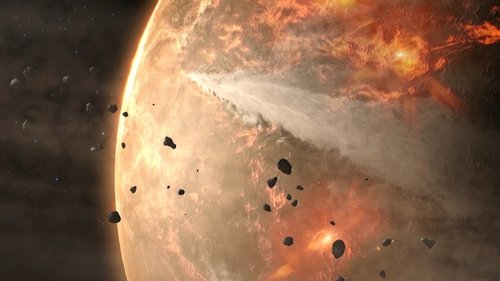
Planet hunters have detected nearly 5000 confirmed and candidate planets beyond our solar system. Most sun-like stars, it seems, are ringed with giant planets that crowd their parent stars and leave no room for planets like ours. The old theories about planetary formation are giving way to a new one defined by fierce gravitational battles and titanic collisions. How did Earth manage to survive?

A startling collision in an ancient galaxy slews Earth's largest telescopes to a spot in the Hydra constellation. Two rapidly spinning neutron stars have violently merged to form a possible black hole. And, for the first time, astronomers see its electromagnetic flash and hear its gravitational thunder as they watch new elements being born.